
I Saw the Crown of Thorns in Heaven: What Its Message Means for You
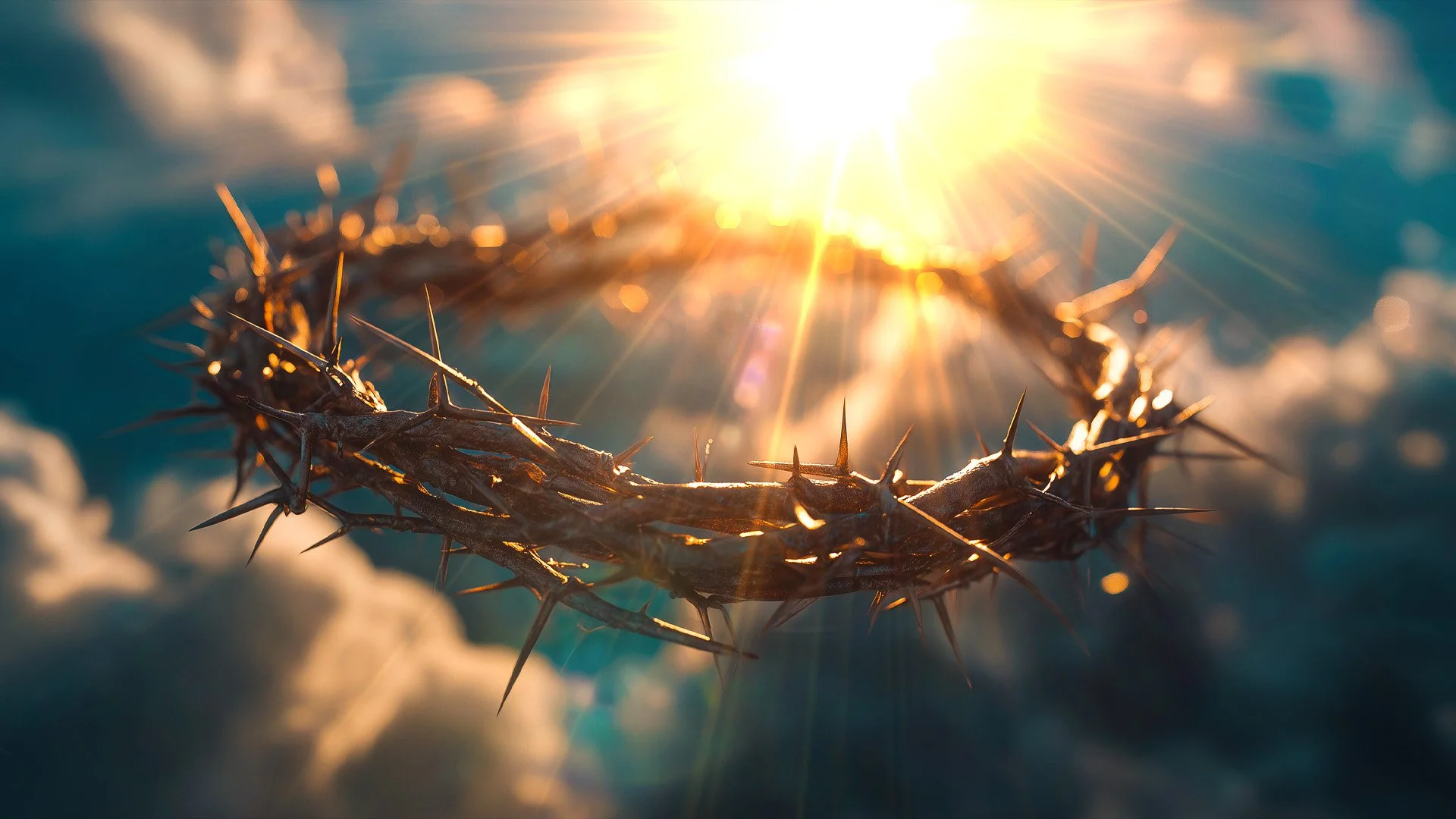
In heaven, there are many crowns that all carry extreme weight and significance, and everyone honors their meaning.
I am sure that when you think about heaven, there are certain crowns that you desire. Let me tell you this though, there is a certain crown that no one wishes they had or will have, and that is the crown of thorns.
To some, the crown of thorns was just an “interesting accessory.” But it carried very significant meaning. The crown that He took (and still to this day He has scars on His head from) has a name on it.
Mine.
I was the one who deserved it and was supposed to suffer under it. That crown of thorns was not just extremely painful, but it was given by the enemy in mockery of Jesus’ truth. It was an emphatic accusation: “You aren’t who You say You are.”
It was making fun of Jesus for being the “King.” It was the enemy’s chance to “celebrate” His “victory” over Adam and Eve. He was convinced the crucifixion would forever kill this King.
The enemy probably sneered, “See, those humans are nothing but mud. Even God Himself became trash when He became one.”
Hebrews 2:14 (TPT) says, “Since all His ‘children’ have flesh and blood, so Jesus became human to fully identify with us. He did this, so that He could experience death and annihilate the effects of the intimidating accuser who holds against us the power of death.”
The crucifixion was the price Adam (and all of humanity) deserved to pay after they were tempted to believe that they were not who God said they were.
You see, because Adam gave up His authority over earth and allowed the accuser to reverse the purpose of earth, God says in Genesis 3:17-18 (NLT): “Since you listened to your wife and ate from the tree, whose fruit I commanded you not to eat, the ground is cursed because of you. All your life you will struggle to scratch a living from it. It will grow thorns and bristles for you, though you will eat its grains.”
Satan didn’t realize his own tables were going to be turned on him. While the accuser counted the crucifixion as a mockery, Christ counted it for all joy.
…His example is this: Because his heart was focused on the joy of knowing that you would be his, he endured the agony of the cross and conquered humiliation and now sits exalted at the right hand of the throne of God! (Hebrews 12:2 TPT)
At the moment of crucifixion, Jesus had a choice. One of the greatest temptations He faced wasn’t just the physical agony ahead but the full knowledge of what was to come. This wasn’t just going to be a “tough few days”—this was eternal death. Complete and utter separation from the Father. Forever.
Jesus had the opportunity on the Cross to call off the mission and return home to heaven.
Jesus says in Matthew 26:53-54 (TPT): “Don’t you realize that I could ask my heavenly Father for angels to come at any time to deliver me? And instantly he would answer me by sending more than twelve legions of angels to come and protect us. But that would thwart the prophetic plan of God. For it has been written that it would happen this way.”
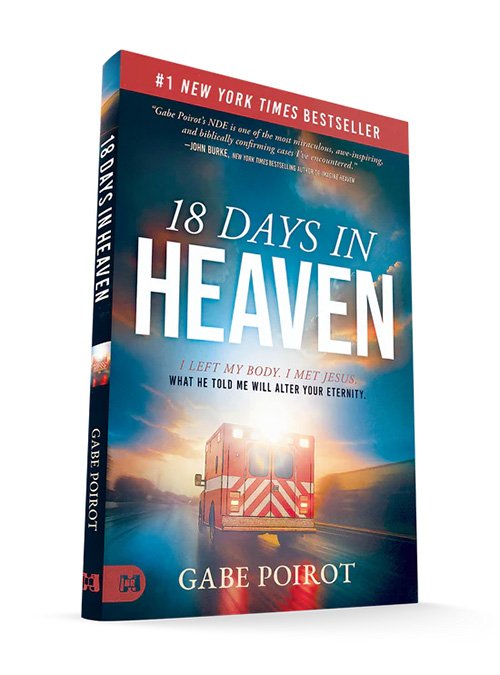
18 Days in Heaven
Gabe Poirot
Jesus said to Himself, “No.”
To help you understand the price He paid, I have included the following from Cahleen Shrier, PhD, professor of Biology at Azusa Pacific University. She has written and spoken extensively on the physiology of Christ’s Crucifixion:
It is quite possibly the most painful death ever invented by humankind. The English language derives the word “excruciating” from crucifixion, acknowledging it as a form of slow, painful suffering. Its punishment was reserved for slaves, foreigners, revolutionaries, and the vilest of criminals. The accused needed to be nailed to the patibulum while lying down, so Jesus is thrown to the ground, reopening His wounds, grinding in dirt, and causing bleeding. They nail His “hands” to the patibulum. The Greek meaning of “hands” includes the wrist. It is more likely that the nails went through Jesus’ wrists. If the nails were driven into the hand, the weight of the arms would cause the nail to rip through the soft flesh.
Therefore, the upper body would not be held to the cross. If placed in the wrist, the bones in the lower portion of the hand support the weight of the arms and the body remains nailed to the cross. The huge nail (seven to nine inches long) damages or severs the major nerve to the hand (the median nerve) upon impact. This causes continuous agonizing pain up both of Jesus’ arms.
Once the victim is secured, the guards lift the patibulum and place it on the stipes already in the ground. As it is lifted, Jesus’ full weight pulls down on His nailed wrists and His shoulders and elbows dislocate (Psalm 22:14). In this position, Jesus’ arms stretch to a minimum of six inches longer than their original length.
It is highly likely that Jesus’ feet were nailed through the tops as often pictured. In this position (with the knees flexed at approximately 90 degrees), the weight of the body pushes down on the nails and the ankles support the weight. The nails would not rip through the soft tissue as would have occurred with the hands. Again, the nail would cause severe nerve damage (it severs the dorsal pedal artery of the foot) and acute pain.
Normally, to breathe in, the diaphragm (the large muscle that separates the chest cavity from the abdominal cavity) must move down. This enlarges the chest cavity, and air automatically moves into the lungs (inhalation). To exhale, the diaphragm rises up, which compresses the air in the lungs and forces the air out (exhalation). As Jesus hangs on the cross, the weight of His body pulls down on the diaphragm and the air moves into His lungs and remains there. Jesus must push up on His nailed feet (causing more pain) to exhale.
In order to speak, air must pass over the vocal cords during exhalation. The Gospels note that Jesus spoke seven times from the cross. It is amazing that despite His pain, He pushes up to say “Forgive them” (Luke 23:34).
The difficulty surrounding exhalation leads to a slow form of suffocation. Carbon dioxide builds up in the blood, resulting in a high level of carbonic acid in the blood. The body responds instinctively, triggering the desire to breathe. At the same time, the heart beats faster to circulate avail-able oxygen. The decreased oxygen (due to the difficulty in exhaling) causes damage to the tissues and the capillaries begin leaking watery fluid from the blood into the tissues. This results in a build-up of fluid around the heart (pericardial effusion) and lungs (pleural effusion). The collapsing lungs, failing heart, dehydration, and the inability to get sufficient oxygen to the tissues essentially suffocate the victim. The decreased oxygen also damages the heart itself (myocardial infarction) which leads to cardiac arrest. In severe cases of cardiac stress, the heart can even burst, a process known as cardiac rupture. Jesus most likely died of a heart attack.
After Jesus’ death, the soldiers break the legs of the two criminals crucified alongside Him (John 19:32), causing suffocation. Death would then occur quicker. When they came to Jesus, He was already dead so they did not break His legs (John 19:33). Instead, the soldiers pierced His side (John 19:34) to assure that He was dead. In doing this, it is reported that “blood and water came out” (John 19:34), referring to the watery fluid surrounding the heart and lungs.”
Long before Jesus was crucified, Isaiah accurately prophesied what was to come:
…There was nothing beautiful or majestic about his appearance, nothing to attract us to him. He was despised and rejected—a man of sorrows, acquainted with deepest grief. We turned our backs on him and looked the other way. He was despised, and we did not care. Yet it was our weaknesses He carried; it was our sorrows that weighed him down. And we thought his troubles were a punishment from God, a punishment for his own sins! But He was pierced for our rebellion, crushed for our sins. He was beaten so we could be whole. He was whipped so we could be healed. All of us, like sheep, have strayed away. We have left God’s paths to follow our own. Yet the Lord laid on him the sins of us all (Isaiah 53:2-6 NLT).
It is understandable to wonder how Love endured the full pain and death of the cross. Not just that, but He endured the ultimate agony of being separated from His Father in the pits of hell, the place that He created only for the accuser—never for human beings.
There is no feeling that is as agonizing as being left and rejected by your own Father.
He was being mocked by the same fallen angels that used to hearken His commandments. In the very pit of hell, the place that He created only for the fallen angels, not for any human, all the demonic forces were rejoicing, convinced that they had captured the King.
For every second He endured in that place, when it seemed like there was no hope or future for Him and that He would have to live eternally separated from His Father and family, He was only thinking about two people—His Father and me.
Amid His deepest agony, He cried aloud: “I will do it for Gabriel. For him, of course I will.”
Yet wasn’t I just a worm-in-the-dirt peasant He had to put up with? No. Instead, I was the apple of His eye. When I saw Jesus, I witnessed this past moment even happening yesterday, today, and forever. It is still echoing throughout the universe.
He Died and Came Back with Revelations that Break Chains on Earth
One moment, blood poured from his ears as doctors prepared his family for the worst. The next, Gabe Poirot's spirit was lifted through a tunnel of living light--straight into the blazing throne room of Heaven.
For 18 miraculous days beyond his body, Gabe encountered Jesus face-to-face and received revelation of what truly happens after your last breath--and how you can live in the power of eternity now.
As a pastor, evangelist, and voice to millions worldwide, Gabe carries a mandate to awaken this generation to the supremacy of Jesus, the authority of His blood, and the believer's identity as sons and daughters of God. His testimony is not about scenery or symbols, but about the blazing reality of Christ Himself.
This is not merely a near-death story--it is a faith-charged encounter that proves your victory, secures your destiny, and calls you to walk in the unstoppable power of His finished work.
In these pages, you'll discover how to:
Walk in covenant victory and enforce the triumph of the cross in every area of life.
Release powerful prayers with Heaven's authority to defeat the enemy.
Break chains of shame, guilt, and condemnation through the finished work of Jesus.
See yourself through the burning eyes of Jesus and discover your true identity in Christ.
Live fearless and faith-filled, knowing your eternity is secure in Him.
From the pavement of a brutal accident to the sapphire floor of Heaven, Gabe's story will activate your faith, dismantle every lie, and ignite your spirit with the unshakable reality of eternity.